
Healing the Threads of Time: Why Ancient Wounds Shape Our Modern Lives
By Victoria Amador
I recently held a small online gathering with people from around the world. As we shared about our healing journeys, one participant tearfully confessed she was on the verge of giving up. No matter what I do, she said, I keep going back to the same issue—just from a different angle. She was exhausted, nearly hopeless, weighed down by what she called her “dark cloud.”
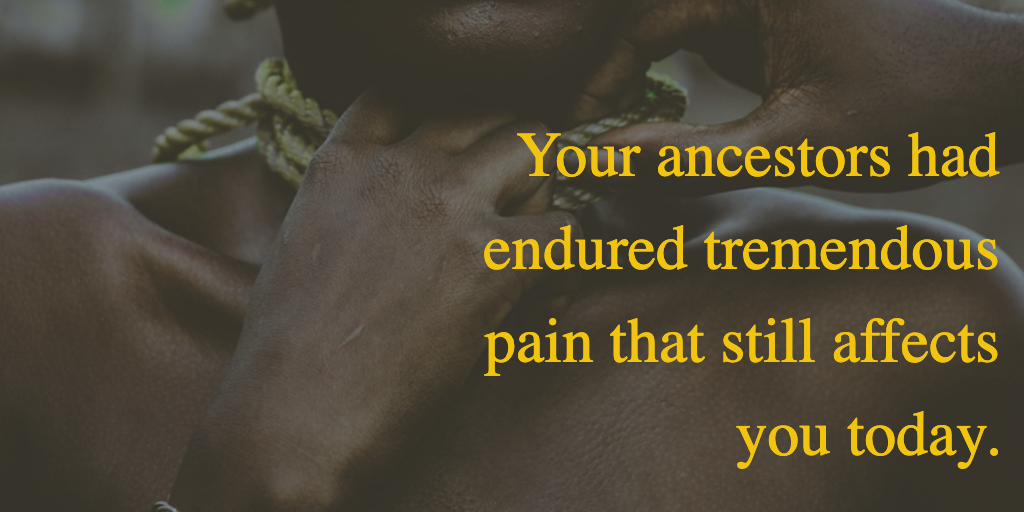
It was my first time speaking with this group, so I gently asked her, “Have you worked with your family shadows or ancestral wounds?” She looked puzzled. “No… I’ve been focused on my own trauma. I don’t really see the point of that. Why would it matter?”
It was the perfect opening to share something often overlooked in today’s world: our stories don’t begin with us.
Within our cellular memory lives a narrative that began long before our first breath. It’s a story written in the language of trauma and resilience—passed down through generations like an invisible inheritance. This legacy isn’t found in family heirlooms or old photographs. It’s embedded in our DNA, and in the energetic patterns that shape how we move through life.
When Ancient Wisdom Meets Modern Science
For thousands of years, Indigenous cultures, yogic traditions, and shamanic lineages have understood what Western science is only beginning to validate: we are energetic beings, deeply interconnected in ways that transcend time, space, and biology.
The chakra system, which maps the body’s energy centers, has existed for over 10,000 years—long before science could measure the subtle forces it describes. Today, quantum physics echoes these teachings, revealing a universe woven from webs of interconnection. In this web, the boundaries between self and other, past and present, begin to dissolve.
And when we look closely at our DNA, we discover something astonishing: 99.9% of human genetic material is identical. The remaining 0.1% creates the illusion of separateness—but the truth is, we are far more unified than divided.
The Neuroscience of Separation
The rational mind is powerful, but it can also be a source of suffering. The analytical brain categorizes, distinguishes, and defines. In doing so, it creates the perception of separation. This isn’t inherently wrong—it’s essential for daily function. But when it dominates, we lose touch with the felt sense of connection to others, to nature, and to the sacred.
That sense of disconnection is deeply painful because the soul knows we are not separate. It remembers unity, even as the mind insists on division. This inner conflict can show up as anxiety, depression, isolation, or the persistent feeling that something fundamental is missing.
The Science of Inherited Trauma
Epigenetics has revolutionized our understanding of trauma and inheritance. While we cannot change our core DNA—our eye color, ancestry, or natural temperament—we can change the way genes express themselves. And this expression is influenced not only by our own experiences, but by those of our ancestors.
Trauma doesn’t just disappear when someone dies. It imprints itself on the nervous system and can be passed down across generations as an unconscious survival strategy.
Take the example of Vietnam veterans. Decades after the war, researchers discovered that their children—and even grandchildren—were exhibiting symptoms of PTSD despite never having seen combat. The nervous system, trained for war, had unknowingly taught the next generations to live in a state of hypervigilance.
If you’d like to explore this further, I recommend:
- Rachel Yehuda, researcher at Mount Sinai, who’s studied trauma transmission among Holocaust survivors and veterans.
- Mark Wolynn, author of It Didn’t Start With You, who synthesizes psychological and scientific research on inherited emotional patterns.
- Bessel van der Kolk, whose classic The Body Keeps the Score explores how trauma lives in the body—and how it echoes through generations.
The Ancestral Web: Beyond Bloodlines
When we expand our understanding of ancestry, a beautiful truth emerges. We are not only carrying the stories of our blood relatives—we are also connected to land ancestors (those who lived on and tended the lands we now inhabit), continental ancestors (holding the collective memory of peoples and cultures), and even planetary ancestors, who embody the evolutionary wisdom of humankind.
Indigenous cultures have long honored these ancestors as living presences, not memories. They understood that healing continues beyond death. We can support our ancestors’ evolution, just as they assist us in ours. This reciprocal relationship fuels transformation on both sides of the veil.
The Energetic Landscape of Trauma
Traditional healing systems like Chinese medicine, Ayurveda, and shamanic traditions agree: trauma creates energetic blockages. These aren’t just metaphorical. Trauma lodges in our bodies, distorting posture, compressing organs, and disrupting flow.
Think of trauma like a tightly packed energy capsule. Inside it lives the original emotional charge, plus the accumulated strain of repression, denial, or avoidance. Left unprocessed, these capsules can manifest as chronic pain, emotional volatility, or patterns that repeat despite our best efforts.
The Rubber Band Effect
Steven Farmer, a shaman and psychotherapist, coined the term “rubber band effect” to describe a common experience in healing: You make progress, feel better, even believe you’ve finally broken through—only to have the old patterns snap back unexpectedly.
This can be deeply discouraging, but it often signals that ancestral trauma is still active beneath the surface. In other words, you may have reprogrammed the software, but the hardware—the intergenerational imprint—still needs attention.
The Path Forward: Healing Across Time
Healing ancestral trauma isn’t about romanticizing the past or carrying burdens that aren’t ours. It’s about reclaiming our wholeness. It’s about recognizing that our struggles are part of a larger, generational story—and that by healing our piece of it, we can shift the entire lineage.
This process often begins with subtle signs: dreams of unknown ancestors, sudden insights, or sensations of being guided by unseen hands. When we quiet the mind and open the heart, we become receptive to this deeper guidance.
Through ceremony, prayer, meditation, dreamwork, or simply intentional listening, we can begin to form a dialogue with the ancestral world. And in doing so, we receive not only their wounds, but their strength, wisdom, and blessings.
A New Human is Emerging
A new kind of human being is awakening—one who knows they are not separate from the Earth, from others, or from the past. This new human understands that true healing must address not only individual trauma, but the inherited wounds that shape our very identities.
As we walk this path, we become bridges—connecting ancient wisdom with modern insight, inner healing with collective transformation. We become the weavers of a new story—one in which pain becomes medicine, and the threads of time that once bound us become pathways of liberation.
When we heal, we don’t heal alone.
We heal seven generations behind us and seven ahead.
We mend the web of life itself—one thread, one breath, one act of remembrance at a time.
Learn more about how your ancestors may be speaking to you thru dreams – check out the dream program here.
#ancestorhealing #ancestralhealing #familywounds #spiritualawakening #spiritualhealing #traumahealing